
How Do Soft Seats and Metal Seats Affect Ball Valve Sealing?
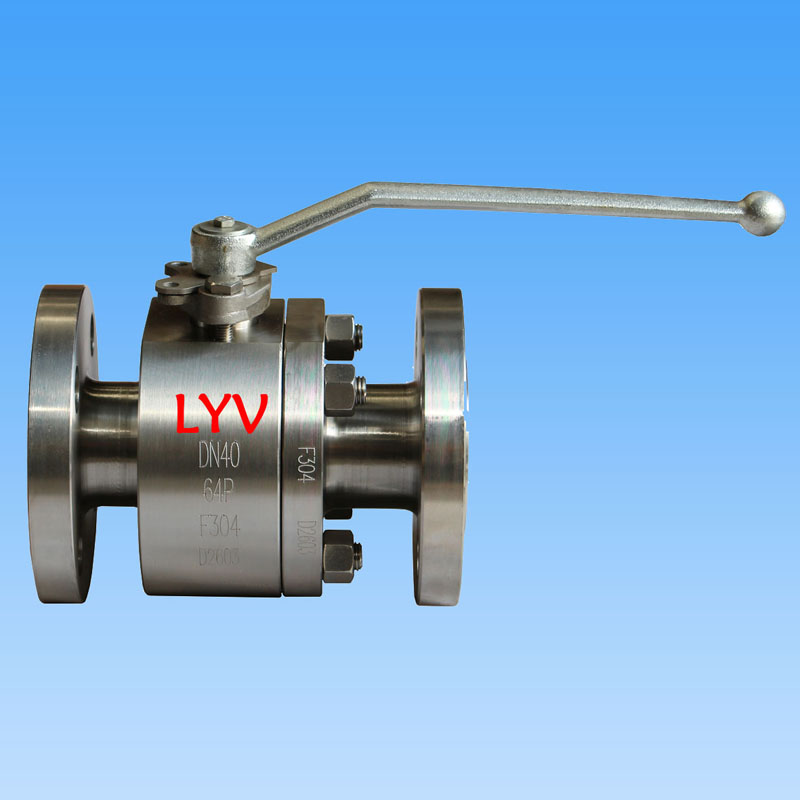
When selecting an industrial ball valve, seat material has a direct effect on sealing performance, operating torque, service life, and suitability for different process conditions. Soft seats, such as PTFE and reinforced PTFE, are commonly selected when tight shutoff is required in clean media. Metal seats are more suitable for demanding applications involving high temperatures, abrasive particles, or erosive fluids. At LYV®, we consider operating temperature, pressure, fluid composition, and leakage requirements before recommending a seat configuration for a 2 Piece Stainless Steel Ball Valve. The right choice is not simply about achieving the tightest seal, but maintaining reliable shutoff under actual operating conditions.
In This Article:
- How Soft Seats and Metal Seats Work
- Soft Seat vs. Metal Seat: Key Differences
- Common Soft Seat Materials and Their Applications
- Metal Seat Surface Treatments
- How to Select the Right Ball Valve Seat
- LYV® 2 Piece Stainless Steel Ball Valve Configurations
- Frequently Asked Questions
How Do Soft Seats and Metal Seats Work in Ball Valves?
The main difference between soft seats and metal seats is how they establish contact with the ball. Both designs aim to prevent unwanted flow when the valve is closed, but they achieve this through different material properties.
Soft Seat: Flexible Material for Tight Shutoff
A soft-seated ball valve uses a non-metallic sealing ring between the ball and the valve body. Common materials include PTFE, glass-filled PTFE, carbon-filled PTFE, and PEEK.
When the valve closes, the seat conforms to the ball's surface under the applied seating force. This helps compensate for minor surface irregularities and creates a tight sealing interface.
We generally recommend considering soft seats for clean water, natural gas, oil, and compatible chemical services where low leakage is a priority. However, the fluid must be compatible with the selected seat material, and the operating pressure and temperature must remain within its rated limits.
Metal Seat: Hard Contact for Demanding Conditions
A metal-seated ball valve uses metal-to-metal contact between the ball and seat. Since metal surfaces do not deform like polymer materials, achieving reliable sealing requires carefully controlled machining accuracy, surface finish, contact geometry, and seating force.
For applications involving abrasive particles, high temperatures, or erosive media, metal seats can offer better resistance to mechanical wear than conventional soft seats. The sealing surfaces may receive additional treatments such as electroless nickel plating (ENP), hard chrome (HCR), tungsten carbide (WC), or hardfacing alloys such as Ni60 and Ni55.
One practical point is that metal seating does not automatically mean zero leakage. Its actual shutoff performance depends on the sealing design, surface condition, manufacturing tolerances, and specified leakage acceptance criteria.
Soft Seat vs. Metal Seat: What Are the Key Differences?
When comparing the two designs, we focus on five factors: sealing tightness, temperature resistance, abrasion resistance, operating torque, and maintenance requirements.
| Comparison Item | Soft Seat Ball Valve | Metal Seat Ball Valve |
|---|---|---|
| Sealing Principle | Polymer-to-metal contact | Metal-to-metal contact |
| Common Materials | PTFE, GFT, CFT, PEEK, Delrin | Stainless steel and hardfaced metal surfaces |
| Shutoff Performance | Generally provides tighter shutoff in suitable clean-service conditions | Depends on surface finish, contact geometry, and seat loading |
| Temperature Resistance | Limited by the selected polymer's pressure-temperature rating | Suitable for higher-temperature services when materials and design are properly specified |
| Abrasion Resistance | More vulnerable to damage from solid particles | Generally better resistance with suitable hardfacing |
| Operating Torque | Generally lower, depending on seat loading and pressure | Can be higher due to metal contact and seating force |
| Typical Applications | Water, clean oil, natural gas, and compatible chemical media | Abrasive fluids, high-temperature processes, and demanding industrial services |
| Selection Priority | Tight shutoff and fluid compatibility | Wear resistance and temperature capability |
There is no universal winner. For example, a PTFE seat may be a better solution for a clean water pipeline requiring tight shutoff, while a properly engineered metal seat may be more appropriate for a process containing abrasive particles. Choosing based only on the nominal pressure class can overlook the actual limitations of the sealing material.
Which Soft Seat Materials Are Used in Stainless Steel Ball Valves?
Different polymer materials have different mechanical properties, chemical compatibility, and temperature limitations. In our 2 Piece Stainless Steel Ball Valve configurations, we consider the following materials according to the service conditions.
| Seat Material | Main Characteristics | Typical Selection Considerations |
|---|---|---|
| Virgin PTFE | Low friction, good chemical resistance, and tight sealing capability | Clean fluids and general industrial applications |
| Glass-Filled PTFE (GFT) | Improved dimensional stability and resistance to deformation compared with virgin PTFE | Applications requiring improved resistance to mechanical loading and wear |
| Carbon-Filled PTFE (CFT) | Improved mechanical properties and wear resistance | Services requiring enhanced seat durability |
| PEEK | High mechanical strength and better resistance to elevated temperatures than conventional PTFE grades | More demanding temperature and pressure conditions, subject to grade-specific ratings |
| Delrin | Good dimensional stability, rigidity, and machinability | Applications where fluid compatibility and operating conditions permit its use |
PTFE is often selected for its chemical resistance and low friction. However, its allowable operating temperature and pressure are not independent values. As pressure increases, the seat's resistance to deformation and extrusion must also be considered.
For reference, API-related valve selection guidance identifies approximately 177°C for PTFE and 205°C for reinforced PTFE as pressure-temperature limits in the relevant API 608 context. These figures should not be treated as universal continuous operating ratings for every valve configuration. We recommend checking the manufacturer's pressure-temperature curve and confirming the exact seat grade before finalizing a specification.
For more technical background, refer to the API RP 615 Valve Selection Guide.
How Do Surface Treatments Improve Metal Seat Sealing?
Metal seats are not simply untreated stainless steel surfaces pressed against a stainless steel ball. In demanding services, the surface condition of both components has a direct influence on wear, friction, and sealing performance.
LYV® offers several metal seat and ball surface treatment options for consideration:
| Surface Treatment | Purpose | Selection Considerations |
|---|---|---|
| ENP | Electroless nickel coating for improved surface hardness and corrosion resistance | Consider coating thickness, substrate condition, and media compatibility |
| HCR | Hard chrome treatment to improve surface hardness and wear resistance | Suitable coating specifications and service environment must be evaluated |
| WC | Tungsten carbide coating for high hardness and abrasion resistance | Consider particle characteristics, coating integrity, and operating conditions |
| Ni60 / Ni55 | Nickel-based hardfacing alloys applied by welding | Consider hardness, coating thickness, machining quality, and corrosion compatibility |
In abrasive service, the ball and seat should be evaluated as a matching sealing pair. Improving the hardness of only one contact surface does not necessarily guarantee longer service life. We also consider the potential for coating damage, uneven wear, and increased operating torque.
For applications with frequent operation, high differential pressure, or solid particles, the required actuator torque should be checked against the actual valve design rather than estimated from valve size alone.
How Should You Select the Right Ball Valve Seat?
In practical valve selection, we recommend starting with the operating conditions instead of choosing a seat material based on its name or advertised temperature range.
1. Check the Operating Temperature and Pressure
Record the normal operating temperature, maximum temperature, minimum temperature, and differential pressure across the closed valve. A seat that performs well under normal conditions may deform or lose sealing capability during temperature fluctuations or pressure spikes.
For soft seats, request the pressure-temperature rating for the specific material grade. For metal seats, check the body material, hardfacing specification, and design pressure-temperature limits.
2. Identify the Fluid and Its Composition
Water, natural gas, petroleum products, oxygen, and chemical fluids have different compatibility requirements. The presence of corrosive compounds, suspended solids, or contaminants can change the recommended seat configuration.
For sour service, the material selection should also consider the applicable requirements of ISO 15156 / NACE MR0175. A stainless steel body alone does not establish that the complete valve is suitable for sour service.
3. Determine the Required Leakage Performance
If the process requires very tight shutoff, a suitable soft seat is often the first option to evaluate. If the application involves high temperatures or abrasive media, a metal seat may be necessary, but the acceptable leakage rate should be clearly specified.
We recommend confirming the inspection and testing requirements under API 598 or the applicable project specification. The acceptance criteria should match the actual seat construction and service requirements.
4. Consider Operating Frequency and Actuator Torque
Frequent opening and closing can increase friction and wear at the sealing interface. Metal-seated designs may require higher operating torque, particularly in larger sizes and higher-pressure applications.
For automated systems, the selected pneumatic or electric actuator should provide sufficient torque across the complete operating range, including the initial breakaway torque.
5. Confirm Fire-Safe Requirements Separately
Seat material selection and fire-safe performance are related but different considerations. A soft-seated ball valve may incorporate a secondary metal sealing arrangement to provide an alternative sealing path if the soft material is damaged during a fire.
Where fire-safe performance is required, the complete valve design must meet the specified testing requirements. LYV®'s available fire-safe design references include API 607 and API 6FA. The required test documentation should be confirmed for the particular valve model.
How Does LYV® Configure a 2 Piece Stainless Steel Ball Valve?
At LYV®, we manufacture industrial valves with a focus on practical operating requirements, material selection, and international design standards. Our technical team includes 15 R&D personnel, representing approximately 25% of our total employees. We also work with technical institutions, including Wenzhou Pump & Valve Research Institute and Lanzhou University of Technology, on valve technology research and development.
For our 2 Piece Stainless Steel Ball Valve, the available design and material specifications include:
| Specification | Available Configuration |
|---|---|
| Design Standards | BS EN ISO 17292, API 608, API 6D, ASME B16.34 |
| Inspection and Testing | API 598 / API 6D |
| Fire-Safe Testing References | API 607 / API 6FA |
| Body Construction | Two-piece, end-entry design |
| Body Materials | ASTM A351 CF8, CF8M, CF3, CF3M; ASTM A182 F304, F316, F304L, F316L |
| Ball Materials | ASTM A182 F304, F316, F304L, F316L |
| Stem Materials | ASTM A182 F304, F316, F304L, F316L, 17-4 PH |
| Seat Options | PTFE, GFT, CFT, PEEK, Delrin, metal seat |
| Bore Design | Full Bore / Reduced Bore |
| End Connections | Flanged, Butt Weld, Socket Weld |
| Pressure Rating | ANSI Class 150, 300, 600, 900; PN ratings available according to size and material |
| Operation | Manual lever, worm gear, pneumatic actuator, electric actuator |
| Service Conditions | Oil, natural gas, water, oxygen gas, and other specified media |
Available Size Range
The following ranges are based on LYV®'s supplied manufacturing specifications. Casting and forging options have different size limitations.
| Pressure Class | Cast Material | Forged Material |
|---|---|---|
| Class 150 | NPS 1/2"–18" | NPS 1/2"–4" |
| Class 300 | NPS 1/2"–18" | NPS 1/2"–3" |
| Class 600 | NPS 1/2"–12" | NPS 1/2"–2" |
| Class 900 | NPS 1/2"–12" | NPS 1/2"–2" |
Our selection process considers the complete valve configuration rather than treating the seat as an isolated component. Body material, ball material, seat material, pressure rating, connection type, and operating method all need to work together.
For example, a Class 300 stainless steel valve handling clean water may be specified with a suitable PTFE seat when tight shutoff is required. A valve handling abrasive process media may need a metal-seated design with an appropriate hardfacing treatment. The final specification should always be confirmed against the actual operating data.
Frequently Asked Questions
1. Do Metal-Seated Ball Valves Provide the Same Tight Shutoff as Soft-Seated Valves?
Not necessarily. Soft seats generally achieve tighter shutoff because polymer materials conform to the ball surface. Metal seats rely on precise metal-to-metal contact, so their leakage performance depends more heavily on surface finish, machining accuracy, seating force, and the specified leakage criteria. However, properly engineered metal seats can meet the requirements of demanding industrial services.
2. Can a PTFE-Seated Ball Valve Be Used for High-Pressure Applications?
Yes, provided the selected seat grade and valve construction are rated for the required pressure and temperature. Reinforced PTFE and other engineered polymers may offer improved resistance to deformation compared with virgin PTFE. The manufacturer's pressure-temperature data should always be checked before selection.
3. Why Does a Ball Valve Become Difficult to Operate After Long-Term Service?
Increased operating torque may result from seat deformation, deposits on the ball, corrosion, packing friction, or damage to the sealing surfaces. In abrasive applications, particles can become trapped between the ball and seat. We recommend inspecting the internal sealing components and checking the actuator torque requirements rather than assuming the problem is caused by the seat material alone.
4. Can a Soft-Seated Ball Valve Be Used for Oxygen Gas?
Potentially, but oxygen service requires special consideration. The seat, packing, lubricant, and all other wetted components must be compatible with oxygen service, and the valve may require specific cleaning, assembly, and inspection procedures. Standard PTFE availability alone does not establish oxygen-service suitability. The complete valve specification must be reviewed against the applicable oxygen-service requirements.
5. Does a Metal-Seated Ball Valve Always Have a Longer Service Life?
No. Metal seats can offer advantages in abrasive and high-temperature applications, but their service life still depends on fluid composition, particle size, corrosion, operating frequency, surface treatment, and maintenance. In clean-fluid applications, a properly selected soft seat may provide a more economical and reliable solution.
6. What Information Is Needed to Specify a Suitable Ball Valve Seat?
We recommend preparing the following information before requesting a valve specification:
- Fluid name and chemical composition
- Normal and maximum operating temperature
- Working pressure and differential pressure
- Presence of suspended solids or abrasive particles
- Required leakage acceptance criteria
- Valve size, pressure class, and end connection
- Manual or automated operation requirements
These details help determine whether PTFE, reinforced PTFE, PEEK, or a metal-seated construction is more appropriate for the application.
Conclusion
Soft seats and metal seats serve different sealing requirements. Soft seats are generally preferred when tight shutoff, low friction, and fluid compatibility are priorities. Metal seats become more attractive when high temperatures, abrasive particles, or demanding wear conditions make polymer seating unsuitable.
At LYV®, we evaluate the seat material together with the valve body, ball, stem, pressure rating, and operating conditions. With our R&D team and experience in industrial valve manufacturing, we provide different material and construction options for the 2 Piece Stainless Steel Ball Valve to meet specific project requirements.
If you are specifying a stainless steel ball valve for a new pipeline or replacing an existing valve, contact LYV® with your operating pressure, temperature, medium, and required valve size. Our technical team can help evaluate the appropriate seat material and valve configuration.
Send Inquiry



X
We use cookies to offer you a better browsing experience, analyze site traffic and personalize content. By using this site, you agree to our use of cookies.
Privacy Policy